

A deal closes in Salesforce.
A Slack message celebrates it
And then…
The implementation team waits for onboarding details, finance waits for billing information, and support waits for system access.
By the time the customer goes live, the excitement of “closed won” is long gone.
Everyone is pumped to start, but nothing moves until someone updates a record, creates a ticket or sends a handoff email.
The problem isn’t doing the work, it’s redoing it. Each update lives in a different system, and none of them talk.
Every handoff means another manual step, another delay, another chance for something to get missed. Momentum fades when it should accelerate.
How Data Orchestration Changes the Game
Most companies try to fix broken handoffs with playbooks, project boards or internal checklists. They help track progress, but they don’t connect the systems where progress actually happens.
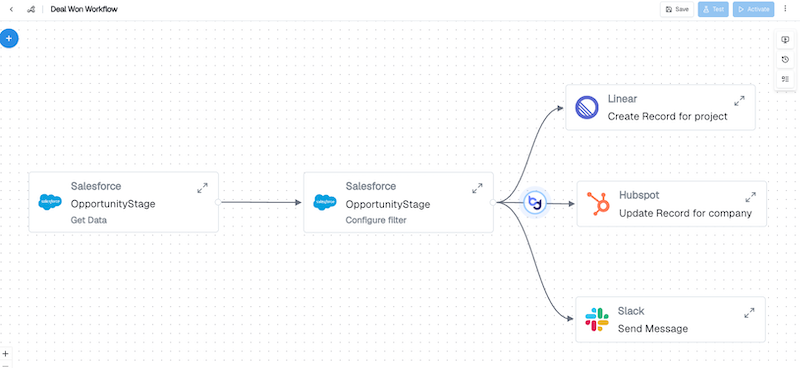
Data orchestration changes that by linking the tools every team already uses. When a deal closes, an orchestration layer moves the work automatically, creating a kickoff task for onboarding, notifying finance to generate an invoice, updating customer data and pinging the right Slack channel.
No one has to copy information, send reminders or chase next steps. Every tool knows what the others just did, and all the information is there and accurate.
Instead of work stopping for a manual handoff between teams and systems, orchestration carries it forward.
Teams stay in sync. Customers feel the momentum.
Bringing It to Life
The value in orchestration isn’t in redefining your tech stack, it’s in making your existing tools work together.
Here’s how to make that happen:
- Map the Transitions
List the moments where work moves between teams, from sales to onboarding, to support to renewals. - Define the Triggers and Actions
For each handoff, set the logic that tells systems what happens next.
Example: When a deal is marked “closed won,” create a kickoff task in Asana, update the customer record in HubSpot, notify finance and post a welcome message in Slack.
Each action happens instantly, without a manual trigger. - Adapt as you Grow
Workflows change as teams grow.
New steps, owners or tools can be added without rebuilding everything from scratch.
Automation stays in sync with how your business actually operates.
The Impact
When handoffs work, teams don’t walk, they run.
Information flows through systems automatically, giving everyone the context they need without the busywork.
Customers onboard faster and alignment becomes the standard.
That’s what BonData does. It turns disconnected tools into one continuous workflow so momentum never stops.